


Recurrent and Persistent Pneumonia in Children
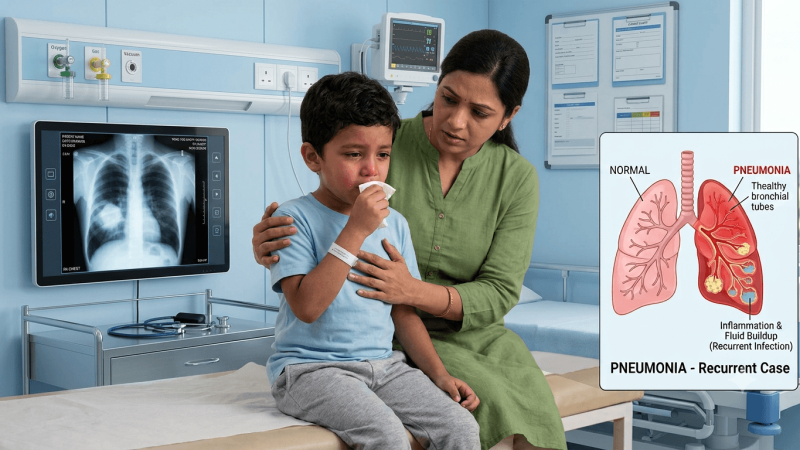
Pneumonia is an infection of the lungs that causes inflammation of the lung tissue and can make breathing difficult. It can affect children of all ages, including newborns. Pneumonia may be caused by bacteria, viruses, fungi, or, less commonly, other infectious organisms.
While most children recover completely from a single episode of pneumonia, repeated episodes or pneumonia that does not improve as expected may indicate an underlying problem that requires further evaluation.
What Are the Symptoms of Pneumonia in Children?
The symptoms of pneumonia can vary depending on the child’s age and the severity and cause of the infection. Common symptoms include:
In infants and young children, difficulty feeding, reduced activity, breathing difficulty, or unusual drowsiness can be important warning signs and should be assessed promptly by a doctor.
How Is Pneumonia Treated in Children?
Treatment depends on the child’s age, symptoms, severity of illness, and the suspected cause of pneumonia.
Antibiotics
Bacterial pneumonia is treated with appropriate antibiotics prescribed by a doctor. Antibiotics do not treat viral infections, so they should not be started or changed without medical advice. WHO recommends oral antibiotics for many uncomplicated cases, while children with severe pneumonia may require hospital-based treatment.
Supportive Care
Children recovering from pneumonia also need adequate fluids, nutrition, rest, and medicines to control symptoms when prescribed by their doctor.
Parents should monitor the child’s breathing, fever, fluid intake, feeding, and general activity. If symptoms worsen or the child develops breathing difficulty, poor feeding, increasing lethargy, or other concerning signs, medical attention should be sought promptly.
When Is Hospital Care Needed?
Some children with pneumonia require hospital treatment, particularly when the infection is severe or the child is unable to take or tolerate oral medication, has significant breathing difficulty, low oxygen levels, or other signs of serious illness.
Depending on the child’s condition, hospital care may include oxygen, intravenous medicines or antibiotics, fluids, blood tests, chest imaging, and close monitoring.
What Is Persistent Pneumonia?
Persistent pneumonia , also called non-resolving pneumonia, refers to pneumonia in which symptoms and radiological abnormalities continue despite appropriate treatment. A commonly used clinical definition is persistence of symptoms and chest X-ray abnormalities for six weeks or more despite treatment.
A child with persistent pneumonia may continue to have:
Persistent pneumonia does not necessarily mean that the original antibiotic was ineffective. There can be several underlying reasons for a child not recovering as expected. These may include an unusual or resistant infection, complications of pneumonia, aspiration, an airway obstruction, an underlying lung condition, or an immune problem.
The child may therefore need further evaluation, which can include blood tests, microbiological investigations, chest imaging, or other specialised tests depending on the clinical history and examination.
What Is Recurrent Pneumonia?
Recurrent pneumonia in children is generally defined as two or more episodes of pneumonia within one year, or three or more episodes overall, with evidence of clearing of the pneumonia between episodes.
This distinction is important. A child who has one episode of pneumonia that never completely resolves may have persistent pneumonia, whereas a child who recovers and later develops pneumonia again may have recurrent pneumonia.
What Causes Recurrent Pneumonia in Children?
Recurrent pneumonia can have many possible causes. These may include:
The possible cause often depends on the child’s age, medical history, pattern of pneumonia, growth, symptoms between infections, and whether the same part of the lung is repeatedly affected
Why Does Recurrent Pneumonia Need Further Evaluation?
Repeated episodes of pneumonia should not simply be treated as separate infections without considering why they are occurring.
A detailed evaluation by a pediatric pulmonologist may help identify an underlying cause, particularly when pneumonia occurs repeatedly, affects the same area of the lung, does not respond as expected to treatment, or is associated with poor growth or other recurrent infections.
Depending on the child’s symptoms, investigations may include blood tests, immune-system evaluation, chest X-ray or CT imaging, testing for specific infections, assessment for aspiration, lung-function testing in appropriate age groups, or other specialised investigations.
Early identification of an underlying cause can help guide appropriate treatment and reduce the risk of further lung damage.
Why Does Recurrent Pneumonia Need Further Evaluation?
You should consider a pediatric pulmonology evaluation if your child:
Has been diagnosed with a congenital lung or airway abnormality
Frequently Asked Questions (FAQs)
No. Recurrent pneumonia means separate episodes of pneumonia with improvement or clearing between episodes. Persistent pneumonia means the infection-related symptoms and radiological abnormalities continue despite appropriate treatment.
A commonly used definition is two or more episodes within 12 months or three or more episodes overall, with clearing between episodes.
Not necessarily. Recurrent pneumonia can have several causes, including aspiration, asthma, airway abnormalities, congenital lung conditions, cystic fibrosis, and immune disorders. A pediatric pulmonologist can assess the child and determine whether further testing is needed.
No. Antibiotics are used when bacterial pneumonia is suspected or diagnosed. Viral pneumonia does not respond to antibiotics. The choice of treatment should be made by the treating doctor based on the child’s age, symptoms, examination, and severity.
Breathing difficulty, significant chest indrawing, inability to feed or drink, unusual sleepiness or reduced responsiveness, low oxygen levels, or worsening symptoms can indicate serious illness and require prompt medical assessment.
Prevention depends on the underlying cause. Keeping vaccinations up to date, maintaining good nutrition, reducing exposure to tobacco smoke and indoor air pollution, and addressing conditions such as aspiration or immune disorders can help reduce the risk of pneumonia.