


Cystic Fibrosis in Children: Causes, Symptoms, Diagnosis and Treatment
Cystic fibrosis (CF) is an inherited genetic condition that mainly affects the lungs and digestive system. Children with cystic fibrosis may develop recurrent or persistent respiratory infections, thick mucus in the airways, poor weight gain, and problems absorbing nutrients from food.
Because the severity of cystic fibrosis can vary considerably between children, diagnosis may sometimes be challenging. Early diagnosis and appropriate multidisciplinary care can help prevent complications and support better growth, nutrition, and lung health.
What Causes Cystic Fibrosis?
Cystic fibrosis is a genetic disease inherited from parents caused by disease-causing changes, or variants, in a gene called the CFTR gene (Cystic Fibrosis Transmembrane Conductance Regulator).
The CFTR protein helps regulate the movement of chloride and water across cells. When CFTR does not function properly, secretions in organs such as the lungs and pancreas become abnormally thick and sticky.
Cystic fibrosis is an autosomal recessive genetic disorder. A child usually develops CF when they inherit one disease-causing CFTR variant from each parent. Parents who carry a single CFTR variant are generally healthy and may not know that they are carriers.
If there is a family history of cystic fibrosis, genetic counselling and appropriate genetic testing may be recommended. Prenatal testing may also be considered in selected families. Newborn screening, where available, can help identify affected babies early.
Why Does a Child With Cystic Fibrosis Get Recurrent Chest Infections?
Healthy lungs continuously clear mucus and inhaled particles through a process called mucociliary clearance. Tiny hair-like structures called cilia help move mucus toward the upper airway.
In cystic fibrosis, the problem is primarily the abnormally thick and dehydrated mucus, which is difficult for the normal clearance mechanisms to remove. The mucus can obstruct the small airways and provide an environment in which certain bacteria can persist.
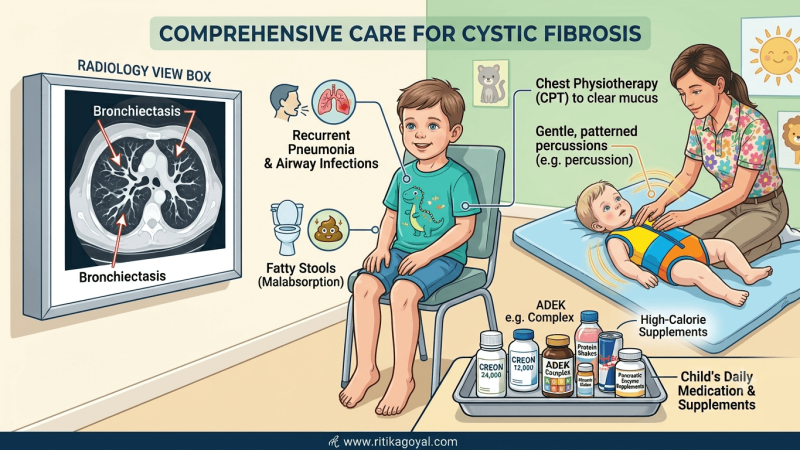
As a result, children with CF can develop recurrent or persistent respiratory symptoms and infections. Over time, repeated airway infection and inflammation can cause progressive lung damage, including bronchiectasis.
Common respiratory symptoms may include:
- Persistent or recurrent cough
- Thick or difficult-to-clear sputum
- Recurrent chest infections
- Wheezing or breathing difficulty
- Poor exercise tolerance
- Persistent respiratory symptoms despite treatment
How Does Cystic Fibrosis Affect a Child’s Growth?
Cystic fibrosis can affect the pancreas and cause pancreatic insufficiency. The pancreas normally produces digestive enzymes that help the body digest food, particularly fats.
When pancreatic enzymes do not reach the intestine adequately, children may have difficulty absorbing nutrients particularly fat, vitamin A,D,E and K. This can result in:
- Poor weight gain
- Poor growth
- Bulky, greasy or foul-smelling stools
- Abdominal symptoms
- Fat malabsorption
- Deficiency of fat-soluble vitamins such as vitamins A, D, E and K
Children with pancreatic insufficiency may require pancreatic enzyme replacement therapy (PERT) with meals and snacks, along with appropriate nutritional and vitamin supplementation.
When Should Cystic Fibrosis Be Suspected in a Child?
Cystic fibrosis should be considered when a child has a combination of respiratory, nutritional, gastrointestinal or family-history features.
Important clues include:
- Recurrent or persistent chest infections
- Chronic cough or persistent respiratory symptoms
- Poor weight gain despite adequate food intake
- Bulky, greasy or foul-smelling stools
- Symptoms suggestive of pancreatic insufficiency
- Fat-soluble vitamin deficiencies
- Episodes of dehydration or salt loss, particularly in hot weather
- Salty-tasting skin
- Meconium ileus in a newborn
- Bronchiectasis without an obvious cause
- A family history of cystic fibrosis
- A sibling or close relative with cystic fibrosis
Having one of these features does not mean that a child definitely has cystic fibrosis. Other conditions can cause similar symptoms, and evaluation by an appropriate pediatric specialist is important.
How Is Cystic Fibrosis Diagnosed?
Sweat Chloride Test
The sweat chloride test is an important test for diagnosing cystic fibrosis. It measures the concentration of chloride (salt) in a child’s sweat.
An appropriately performed sweat chloride test is a key diagnostic investigation, particularly when interpreted along with the child’s symptoms, examination findings, and other investigations.
Genetic Testing
Genetic testing can identify disease-causing variants in the CFTR gene. Because many different CFTR variants can cause cystic fibrosis, genetic testing may involve a targeted panel or more comprehensive CFTR analysis depending on the clinical situation and the initial test results.
A negative test for one common CFTR variant does not necessarily exclude cystic fibrosis.
Other Tests
Depending on the child’s symptoms, doctors may also recommend:
- Stool fecal elastase to assess pancreatic function
- Assessment of nutritional status and fat-soluble vitamin levels
- Sputum or respiratory cultures to identify airway bacteria
- Lung function testing in age-appropriate children
- Chest imaging when clinically indicated
- Newborn screening, where available
Newborn screening commonly begins with measurement of immunoreactive trypsinogen (IRT), followed by appropriate confirmatory testing when the screening result is abnormal.
How Is Cystic Fibrosis Treated in Children?
Cystic fibrosis requires long-term, multidisciplinary care. Treatment is individualized according to the child’s age, symptoms, lung function, infection history, nutritional status, pancreatic function and CFTR variants.
1. Airway Clearance
Airway-clearance techniques help loosen and remove thick mucus from the lungs. These may include respiratory physiotherapy and other airway-clearance methods appropriate for the child’s age and condition.
Regular airway clearance is an important part of maintaining lung health in children with CF.
2. Inhaled Medicines
Some children may require inhaled medications to help improve airway clearance or manage respiratory complications. The specific treatment depends on the child’s clinical condition.
3. Treatment of Respiratory Infections
Children with CF may develop infections with organisms that can persist in the airways. Respiratory cultures can help guide antibiotic treatment when infection or a pulmonary exacerbation is suspected.
Antibiotics may be given orally, by inhalation, or intravenously depending on the type and severity of infection.
4. Pancreatic Enzyme Replacement Therapy
Children with pancreatic insufficiency may need pancreatic enzymes with meals and snacks to improve digestion and absorption of nutrients.
Adequate calorie intake, protein, vitamins and minerals is particularly important for children with CF because good nutritional status is closely linked with overall health.
5. Vitamins and Nutritional Support
Children with pancreatic insufficiency may require supplementation of fat-soluble vitamins, particularly vitamins A, D, E and K.
Regular monitoring of weight, height and nutritional status helps identify growth problems early.
6. CFTR Modulator Therapy
Modern cystic fibrosis treatment may include CFTR modulator medicines for children who have eligible CFTR variants. These medicines target the underlying CFTR protein defect rather than treating only its consequences.
Eligibility depends on factors such as the child’s age, specific CFTR variants and local regulatory approvals. A cystic fibrosis specialist can determine whether a child may be eligible.
What Is the Role of a Pediatric Pulmonologist in Cystic Fibrosis?
A pediatric pulmonologist plays an important role in managing the respiratory aspects of cystic fibrosis.
Depending on the child’s needs, care may involve a multidisciplinary team that includes:
- Pediatric pulmonologist
- Respiratory physiotherapist
- Dietitian
- Gastroenterologist
- CF specialist team
- Microbiology or infectious-disease specialists
- Genetic counsellor
- Other pediatric specialists when required
The pediatric pulmonologist may monitor lung function, respiratory symptoms, airway infections and disease progression. They also help guide airway-clearance treatment, inhaled therapies and management of respiratory exacerbations.
Regular follow-up is important even when a child appears well because early identification of respiratory and nutritional problems can allow treatment to begin before significant complications develop.
Can Cystic Fibrosis Be Managed Successfully?
Cystic fibrosis is a lifelong condition, but treatment has advanced considerably. Early diagnosis, regular monitoring, airway clearance, appropriate treatment of infections, nutritional support, pancreatic enzyme therapy when required, and CFTR-modulating treatment for eligible patients have significantly changed the management of CF.
The exact treatment plan varies from child to child.
Frequently Asked Questions About Cystic Fibrosis in Children
Yes. Cystic fibrosis is an inherited genetic disorder caused by disease-causing variants in the CFTR gene. A child generally needs to inherit a disease-causing variant from both parents to develop CF.
Yes. Many families have no known previous history of cystic fibrosis. Parents can be healthy carriers without knowing that they carry a CFTR variant.
The sweat chloride test measures the amount of chloride, or salt, in a child’s sweat. It is one of the most important diagnostic tests for cystic fibrosis.
No. Recurrent pneumonia has many possible causes. However, recurrent or persistent chest infections combined with poor growth, pancreatic insufficiency, characteristic stools, salty skin or a family history of CF may warrant evaluation for cystic fibrosis.
Poor weight gain can occur because cystic fibrosis may cause pancreatic insufficiency and poor absorption of nutrients. Increased nutritional requirements associated with chronic lung disease can also contribute.
Currently, cystic fibrosis is a lifelong genetic condition. However, modern treatments can target different aspects of the disease, and CFTR modulators can target the underlying CFTR protein defect in eligible patients.
Currently, cystic fibrosis is a lifelong genetic condition. However, modern treatments can target different aspects of the disease, and CFTR modulators can target the underlying CFTR protein defect in eligible patients.
Consider discussing your child’s symptoms with a pediatric pulmonologist if your child has recurrent or persistent chest infections, chronic cough, unexplained poor growth, bronchiectasis, persistent respiratory symptoms, or other features suggestive of cystic fibrosis.
Take-Home Message for Parents
Cystic fibrosis can affect a child’s lungs, pancreas, nutrition and overall growth. Recurrent respiratory infections, thick airway secretions and poor weight gain can be important clues, but these symptoms can also occur in other childhood conditions.
If cystic fibrosis is suspected, appropriate evaluation may include a sweat chloride test, CFTR genetic testing and assessment of pancreatic and nutritional status.
Early diagnosis and comprehensive care can help children receive appropriate treatment and monitoring at the earliest possible stage.
This information is intended for general patient education and does not replace an individual medical evaluation. If your child has recurrent chest infections, persistent cough, poor weight gain or other concerning symptoms, please consult a qualified pediatrician or pediatric pulmonologist.