

Suppurative Lung Disease Like Bronchiectasis
- Home
- Conditions Treated
- Suppurative Lung Disease Like Bronchiectasis

Bronchiectasis in Children
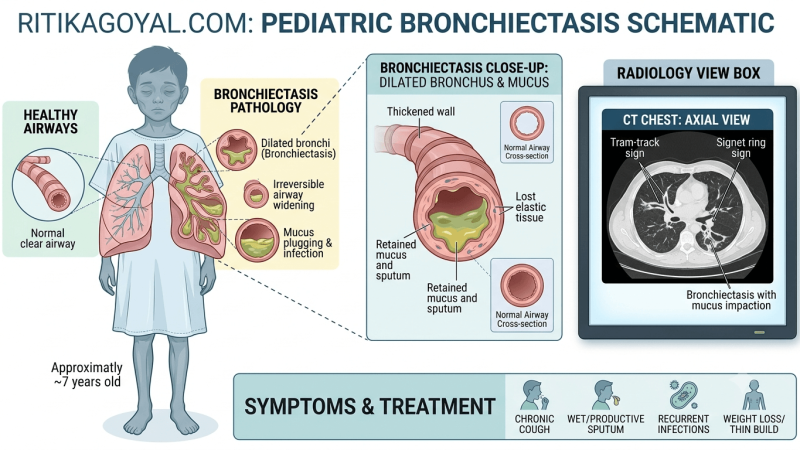
Bronchiectasis is a chronic lung condition in which the airways become permanently widened and damaged, making it difficult for children to clear mucus and secretions from their lungs. The retained mucus can promote repeated infections and ongoing inflammation, which may further damage the airways.
Children with bronchiectasis commonly have a chronic wet or productive cough, recurrent chest infections and excessive mucus production. Early diagnosis and appropriate treatment are important to prevent progressive lung damage and preserve lung function.
What Causes Bronchiectasis in Children?
Bronchiectasis can develop when repeated infection, inflammation or an underlying disorder damages the walls of the airways.
Some important causes and associated conditions include:
- Recurrent or severe lung infections and pneumonia
- Primary ciliary dyskinesia (PCD), a genetic disorder affecting the normal movement of airway cilia and mucus clearance
- Cystic fibrosis (CF), in which abnormally thick mucus makes airway clearance difficult
- Immune system disorders, which can predispose children to recurrent respiratory infections
- Aspiration of food, milk or stomach contents into the lungs
- Airway obstruction, including an inhaled foreign body
- In some children, the underlying cause may remain unknown despite detailed evaluation – Idiopathic Bronchiectasis
What Are the Symptoms of Bronchiectasis in Children?
The most common symptom of pediatric bronchiectasis is a chronic wet or productive cough.
- Other symptoms may include:
- Persistent cough lasting more than 4 weeks
- Coughing up thick or excessive mucus
- Recurrent chest infections or pneumonia
- Wheezing or noisy breathing
- Poor weight gain or growth in some children
- Episodes of fever associated with respiratory infections
A chronic wet cough should not be considered normal in a child. Persistent symptoms warrant evaluation for conditions such as bronchiectasis, protracted bacterial bronchitis, cystic fibrosis, primary ciliary dyskinesia and other chronic respiratory disorders.
How Is Bronchiectasis Diagnosed?
Diagnosis begins with a detailed history and examination, including the child’s pattern of cough, previous respiratory infections, growth, exercise tolerance and any family history of lung disease.
Chest X-ray
A chest X-ray may provide useful information about lung changes and help identify other causes of persistent respiratory symptoms. However, a normal chest X-ray does not always exclude early bronchiectasis.
HRCT Chest
A high-resolution CT (HRCT) scan of the chest is an important investigation when bronchiectasis is suspected. It can demonstrate characteristic changes such as:
- Signet ring appearance – Dilated bronchi
- Mucus plugging
- Tram-track appearance of bronchi
- Peripheral spread of bronchi
Tests to Find the Underlying Cause
Once bronchiectasis is identified, it is important to look for the reason why it developed. Depending on the child’s symptoms and clinical history, investigations may include:
- Sweat chloride testing and genetic testing for cystic fibrosis
- Evaluation for primary ciliary dyskinesia
- Immune system evaluation
- Sputum or airway secretion cultures
- Assessment for aspiration or swallowing problems
Flexible Bronchoscopy
Some children may require flexible bronchoscopy. This allows direct examination of the airways and can help identify airway abnormalities, mucus plugging or a possible foreign body.
Bronchoalveolar lavage performed during bronchoscopy can also provide samples for microbiological testing when obtaining an adequate sputum sample is difficult.
How Is Bronchiectasis Treated in Children?
The goals of treatment are to clear mucus from the airways, treat infections, reduce inflammation and prevent further lung damage.
Treatment is individualized according to the severity of bronchiectasis and its underlying cause.
Airway Clearance Therapy
Airway clearance is one of the most important parts of managing childhood bronchiectasis.
Children may be taught age-appropriate airway clearance techniques to help move mucus from the smaller airways into the larger airways, where it can be coughed out.
Depending on the child’s age and needs, techniques may include:
- Chest physiotherapy
- Breathing exercises
- Positive expiratory pressure techniques
- Use of airway clearance devices like Acapella
Regular airway clearance can help reduce mucus retention and may decrease the frequency of respiratory exacerbations.
Nebulized Medicines
In selected children, nebulized saline solutions, including hypertonic saline, may be used to assist mucus clearance.
Other mucus-modifying treatments are used selectively and depend on the underlying condition. For example, some therapies used routinely in cystic fibrosis should not automatically be applied to children with bronchiectasis from other causes.
Antibiotics
Respiratory infections and exacerbations of bronchiectasis may require antibiotics. The choice of antibiotic is ideally guided by the child’s clinical condition and, when available, the results of respiratory secretion cultures.
Some children with frequent exacerbations or persistent bacterial infection may require prolonged or specialized antibiotic treatment under specialist supervision.
Treatment of the Underlying Cause
Identifying and treating the cause of bronchiectasis is an essential part of management.
For example:
- Children with cystic fibrosis require disease-specific treatment.
- Children with primary ciliary dyskinesia require comprehensive airway-clearance and infection-management strategies.
- Children with immune deficiencies may require specific immune-directed treatment.
- Children with aspiration-related lung disease require assessment and management of the underlying swallowing or reflux problem.
Why Is Chest Physiotherapy Important in Bronchiectasis?
In bronchiectasis, damaged and widened airways may not clear mucus effectively. This allows secretions to remain in the lungs, creating an environment where bacteria can multiply and infections can recur.
Regular airway clearance and chest physiotherapy help mobilize these secretions and improve their removal from the lungs.
The airway-clearance program should be tailored to the child’s age, ability, disease severity and response to treatment.
Can Bronchiectasis in Children Be Prevented?
Not every case of bronchiectasis can be prevented. However, early recognition and treatment of recurrent respiratory infections, chronic wet cough and underlying disorders can help reduce the risk of progressive airway damage.
Children with persistent wet cough or repeated episodes of pneumonia should be evaluated rather than repeatedly treated for individual infections without investigating the underlying cause.
When Should Parents Consult a Pediatric Pulmonologist?
Parents should seek specialist evaluation if a child has:
- A wet cough lasting more than 4 weeks
- Recurrent pneumonia or chest infections
- Persistent or excessive mucus production
- Breathlessness or reduced exercise tolerance
- Poor weight gain associated with chronic respiratory symptoms
- A known condition such as cystic fibrosis or primary ciliary dyskinesia
- Repeated courses of antibiotics for respiratory infections
- Persistent respiratory symptoms despite standard treatment
Take-Home Message
Bronchiectasis in children is a treatable chronic lung condition, but early diagnosis and consistent airway clearance are important to prevent further lung damage.
A persistent wet cough is one of the most important warning signs. Children with chronic wet cough, recurrent pneumonia or excessive airway secretions should be assessed by a pediatric pulmonologist to determine the cause and develop an individualized treatment plan.