

Allergic Rhinitis in Children
Allergic rhinitis is a common condition in children in which the immune system overreacts to allergens present in the air. When a child breathes in an allergen, the immune response can cause inflammation and swelling of the lining of the nose, leading to symptoms such as sneezing, a runny or blocked nose, and nasal itching.
Common triggers include pollens from trees, grasses and weeds, house dust mites, mould, pet dander and other airborne allergens. In some children, certain foods may also contribute to allergic symptoms, although food allergy is not a common cause of isolated allergic rhinitis.
Allergic rhinitis may be:
- Seasonal: Symptoms occur during particular times of the year, often when specific pollens are present, and may last for days or several months.
- Persistent: Symptoms occur throughout the year, often because of ongoing exposure to allergens such as house dust mites, mould or pet dander.
What Are the Symptoms of Allergic Rhinitis in Children?
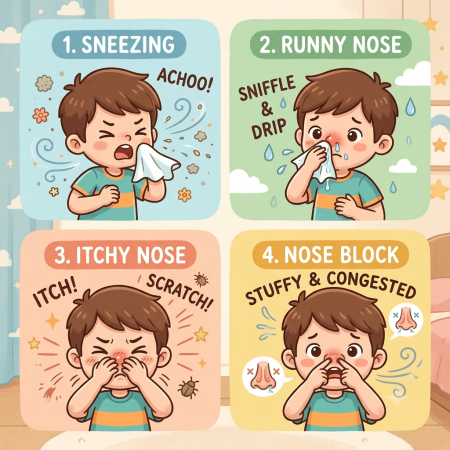
The four main symptoms of allergic rhinitis are:
- Runny nose
- Itchy nose
- Sneezing, particularly in the morning
- Blocked or stuffy nose
Children may also experience:
- Itchy eyes, mouth or throat
- Watery, red or swollen eyes
- Dry mouth
- Headaches
- Ear discomfort or ear pain
- Difficulty smelling
- Repeated sore throats
- Mouth breathing
- Snoring or disturbed sleep
If your child frequently has these symptoms, particularly without fever or an obvious infection, it is worth discussing them with a doctor. Allergic rhinitis can sometimes be mistaken for repeated colds or sinus problems.
What Should I Do If My Child Has These Symptoms?
If your child has frequent sneezing, nasal itching, a persistent runny or blocked nose, or recurring eye symptoms, consult a doctor for an appropriate evaluation.
The doctor will assess your child’s symptoms, their pattern and possible triggers. A detailed history is important because allergic rhinitis can be seasonal or occur throughout the year.
Identifying and reducing exposure to the child’s specific allergens is an important part of management.
What Can Happen If Allergic Rhinitis Is Not Controlled?
Allergic rhinitis (AR) is more than just a runny or blocked nose. If nasal inflammation and congestion continue for a long time, they can affect a child’s sleep, breathing, concentration and overall quality of life.
Adenoid Hypertrophy
Persistent nasal inflammation and mouth breathing may be associated with adenoid hypertrophy, in which the adenoids (lymphoid tissue located behind the nose) become enlarged. Enlarged adenoids can further obstruct the nasal airway and make it difficult for a child to breathe comfortably through the nose.
Adenoid hypertrophy can contribute to:
- Mouth breathing: Nasal obstruction may cause a child to breathe predominantly through the mouth, particularly during sleep.
- Snoring and disturbed sleep: Enlarged adenoids can narrow the upper airway and contribute to snoring, restless sleep and frequent night-time awakenings.
- Sleep-disordered breathing: Significant adenoid enlargement may contribute to obstructed breathing during sleep and, in some children, obstructive sleep apnoea.
- Poor sleep and daytime fatigue: Children who do not sleep well may be tired, irritable or less attentive during the day.
- Poor sleep and daytime fatigue: Children who do not sleep well may be tired, irritable or less attentive during the day.
- Recurrent throat or ear problems: Enlarged adenoids can interfere with normal drainage and ventilation of the middle ear and may be associated with recurrent ear problems or throat symptoms.
- Dry mouth: Persistent mouth breathing can cause dryness of the mouth and throat.
- Dental and facial development: Long-standing nasal obstruction and mouth breathing during childhood may contribute to changes in dental alignment and facial growth in some children.
Why Is Early Treatment Important?
The relationship between allergic rhinitis and adenoid enlargement can be complex. Allergic inflammation may contribute to persistent nasal obstruction, while enlarged adenoids can further worsen nasal breathing. This can create a cycle of nasal blockage → mouth breathing → poor sleep → daytime symptoms.
Recognising and treating allergic rhinitis early can help reduce nasal symptoms and may prevent or minimise the impact of persistent nasal obstruction. If your child snores regularly, sleeps with an open mouth, has restless sleep, pauses in breathing during sleep, or has persistent nasal blockage, an evaluation for adenoid hypertrophy and sleep-disordered breathing may be appropriate.
How Is Allergic Rhinitis Diagnosed?
Diagnosis begins with a detailed medical history and clinical examination. Your doctor will look at:
- The type and duration of symptoms
- Whether symptoms are seasonal or present throughout the year
- Possible environmental triggers
- Family history of allergies
- Associated conditions such as asthma or eczema
Allergy Testing
When an allergy is suspected, allergy testing can help identify the specific allergens responsible for the child’s symptoms.
A skin prick test is one commonly used method. Small amounts of suspected allergens are introduced into the skin and the area is observed for an allergic reaction. The test should be interpreted by a qualified doctor along with the child’s symptoms and clinical history.
A positive allergy test indicates sensitisation to an allergen; it does not by itself prove that the allergen is responsible for every symptom. Your doctor will interpret the result in the context of your child’s history.
How Is Allergic Rhinitis Treated in Children?
Treatment depends on the child’s age, symptoms, severity and identified triggers.
1. Avoiding Allergens
Reducing exposure to known allergens is an important first step. However, avoiding allergens completely is not always possible, particularly with airborne allergens such as pollen.
Depending on the trigger, your doctor may recommend practical measures to reduce exposure.
2. Antihistamines
Antihistamines, commonly known as anti-allergy medicines, can help reduce symptoms such as sneezing, itching and a runny nose. The choice and dose should be appropriate for the child’s age and advised by a doctor.
3. Nasal Steroid Sprays
Intranasal corticosteroid sprays are among the most effective treatments for persistent allergic rhinitis. They reduce inflammation inside the nose and can improve nasal blockage, sneezing and runny nose.
When prescribed and used correctly at the recommended dose, these medicines are generally considered safe for children. Parents should use them only as advised by their doctor and ensure that the spray is administered with the correct technique.
4. Saline Nasal Rinses
Saline nasal sprays or rinses can help clear mucus and allergens from the nasal passages and may provide additional symptom relief.
For children, nasal irrigation should be performed using an age-appropriate method and safe, sterile/distilled or appropriately boiled and cooled water, as advised by a healthcare professional.
5. Decongestants
Decongestant nasal drops or sprays may provide short-term relief from severe nasal blockage. However, they are not suitable for prolonged use, as excessive or prolonged use can actually worsen nasal congestion. Their use in children should be guided by a doctor.
What About Yoga and Pranayama?
Breathing exercises such as pranayama may be used as a complementary wellness practice by some families. However, they should not replace evidence-based medical treatment for allergic rhinitis. Nasal saline irrigation may help with nasal symptoms when performed safely and correctly.
Allergen Immunotherapy for Children
For some children with persistent or troublesome allergic rhinitis, allergen immunotherapy may be considered when symptoms remain difficult to control despite appropriate treatment or when avoiding the allergen is not practical.
Immunotherapy works by giving the child carefully controlled, gradually increasing exposure to the allergen to help the immune system become less sensitive to it over time.
Depending on the allergen and treatment plan, immunotherapy may be given as:
- Injections (subcutaneous immunotherapy)
- Tablets or drops placed under the tongue (sublingual immunotherapy)
Allergen immunotherapy is a specialised treatment and is not appropriate for every child. The decision should be made after confirming the relevant allergy and discussing the potential benefits, duration, risks and suitability with an allergy specialist.
When Should Parents Seek Medical Advice?
Consider an evaluation if your child has:
- Frequent sneezing or a constantly runny nose
- Persistent nasal blockage
- Recurrent itchy or watery eyes
- Regular mouth breathing or snoring
- Poor sleep because of nasal symptoms
- Recurrent symptoms during a particular season
- Symptoms that continue throughout the year
- Difficulty concentrating at school because of poor sleep or persistent symptoms
- Symptoms that do not improve with usual measures
Symptoms that do not improve with usual measures
Take-Home Message for Parents
Allergic rhinitis in children is common and treatable. Persistent sneezing, nasal itching, runny or blocked nose and itchy or watery eyes should not always be dismissed as repeated colds.
Identifying the child’s triggers, reducing allergen exposure and using appropriate treatment can significantly improve symptoms and quality of life. When symptoms are persistent or difficult to control, allergy testing and allergen immunotherapy may be considered.
If you suspect allergic rhinitis in your child, consult a qualified paediatrician, pulmonologist or allergy specialist for an individualised assessment and treatment plan.
Pediatric Tuberculosis Care
Tuberculosis in children requires a careful, child-specific approach to diagnosis, treatment and prevention. Because symptoms can be subtle and children may be unable to provide adequate respiratory samples, evaluation should consider the child’s age, symptoms, growth pattern, exposure history and clinical findings.
If you are concerned that your child may have tuberculosis or your child has been exposed to someone with TB, seek medical evaluation rather than waiting for symptoms to become severe.
Dr Ritika Goyal, Pediatric Pulmonologist and Allergy Specialist in Delhi, provides evaluation and management of childhood respiratory diseases, including suspected tuberculosis, recurrent respiratory symptoms and other pediatric lung conditions.
Disclaimer: This page is intended for general educational information and does not replace a medical consultation. TB diagnosis, preventive treatment and anti-tuberculosis medicines should be prescribed and monitored by a qualified healthcare professional based on the individual child’s clinical condition.