


Childhood Asthma
Helping your child breathe better, sleep better and stay active
Childhood asthma is a common long-term condition in which the airways become inflamed and sensitive, making breathing difficult at times. Children with asthma may experience coughing, wheezing, shortness of breath or chest tightness. Symptoms can vary from child to child and may come and go over time.
Asthma can often be well controlled with the right treatment and regular follow-up. With appropriate asthma management, most children can participate in school, sports, play and other everyday activities.
As a pediatric pulmonologist, Dr. Ritika Goyal evaluates children with recurrent cough, wheezing, breathing difficulty and suspected or diagnosed asthma, with an emphasis on accurate diagnosis, individualized treatment and helping parents understand how to manage asthma confidently.
What is asthma in children?
Asthma is a condition in which the airways are unusually sensitive and can become inflamed and narrowed. This can make it harder for air to move in and out of the lungs.
Asthma symptoms can be triggered or worsened by factors such as:
Not every child has the same triggers, and identifying the factors that worsen symptoms can be an important part of asthma management.
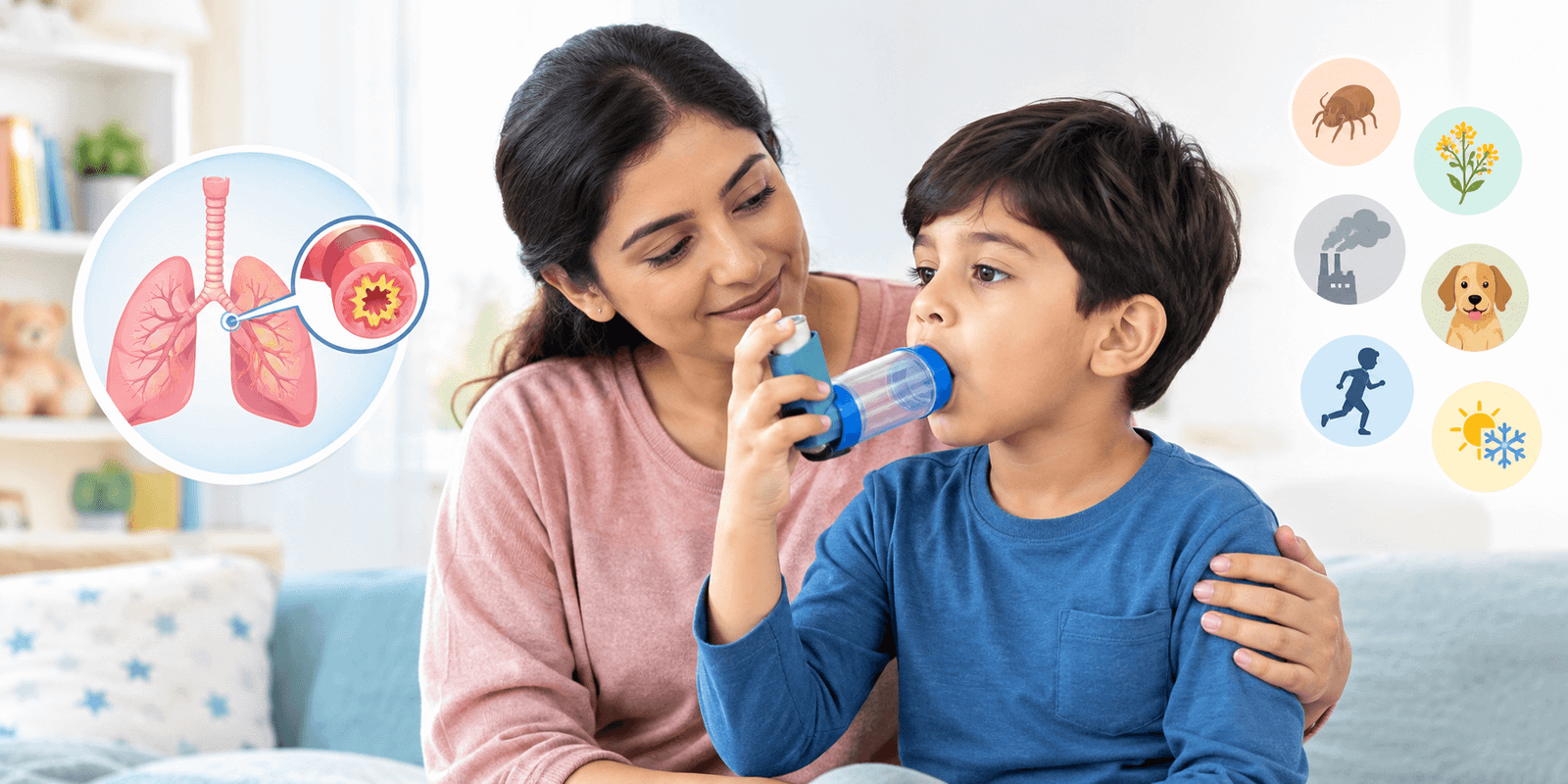
What Happens to the Lungs During an Asthma Episode?
During an asthma flare-up, the airways may become swollen and narrowed, and the muscles surrounding them can tighten. This can restrict airflow and cause symptoms such as wheezing, coughing and breathlessness.
Repeated or poorly controlled airway inflammation can affect a child&’s sleep, physical activity, school attendance and overall quality of life. Good asthma control aims to reduce symptoms and prevent severe flare-ups.
What are the symptoms of childhood asthma?
Asthma may look different in different children. Some children mainly cough, while others have obvious wheezing or breathing difficulty.
Common symptoms include:
A child does not necessarily need to have all these symptoms to have asthma.
A particularly important clue is a recurrent pattern of symptoms—for example, repeated episodes of cough or wheezing, symptoms after running or laughing, or symptoms that become worse during respiratory infections.
Does every child who wheezes have asthma?
No.
Wheezing is common in young children, particularly during viral infections, and not every child who wheezes has asthma. Other conditions can also cause cough, noisy breathing or breathing difficulty.
This is why a careful history, clinical examination and, when appropriate, lung-function testing are important before making a diagnosis.
In younger children, diagnosing asthma can be particularly challenging because they may not be able to perform standard breathing tests reliably. The diagnosis may therefore involve looking at the pattern of recurrent symptoms, excluding other causes and assessing the child's response to asthma treatment.
How is childhood asthma diagnosed?
Asthma is a clinical diagnosis. There is no single test that diagnoses asthma in everychild.
The pediatric pulmonologist may review the child’s history and after a physical examination consider the diagnosis of asthma.
Lung Function tests can be useful in supporting the clinical diagnosis of asthma and understanding the status of the airway. Since asthma is a variable disease of the airway, a normal lung function does not rule out the diagnosis of asthma.
LUNG FUNCTION TESTS for Children
Spirometry – Gold standard test for asthma in children as well as adults
Can be performed by children >6 years old. To know more about Spirometry tests, click here (LINK)
Impulse Oscillometry – Pediatric lung function test specially designed for preschool children
between 3-6 years. To know more about Impulse Oscillometry, click here (LINK)
These lung function tests need special machines and trained technicians and are interpreted by a pediatric pulmonologist to confirm a diagnosis of asthma.
How is asthma treated in children?
The goal of childhood asthma treatment is not simply to treat an attack when it occurs. The aim is to control symptoms, reduce asthma flare-ups, maintain normal activity and protect the child&’s lung health.
Treatment may include:
1. Controller medicines
Some children require regular anti-inflammatory treatment to reduce airway inflammation and prevent symptoms and asthma attacks. Inhaled corticosteroids (ICS) are an important component of asthma treatment for children.
The medicine and dose are selected according to the child&’s age, symptoms, asthma severity and response to treatment.
2. Reliever medicines
Reliever inhalers are used to provide rapid relief when asthma symptoms occur. Your child&’s doctor will explain when and how they should be used.
Frequent dependence on a reliever inhaler may indicate that the asthma is not adequately controlled and should prompt medical review.
3. Inhaler and spacer technique
For children using inhalers, correct technique is extremely important. A spacer may be recommended for young children to help deliver inhaled medication effectively.
Parents should periodically have their child&’s inhaler technique checked rather than assuming it is correct.
4. Identifying and reducing triggers
Understanding what makes your child&’s asthma worse can help reduce symptoms. Depending on the child, this may involve reducing exposure to tobacco smoke, indoor allergens, air pollution or other identified triggers.
5. A personalised asthma action plan
Parents and older children should know what to do when asthma symptoms are well controlled, when symptoms start worsening and when urgent medical care is needed.
A written asthma action plan can help parents, caregivers and school staff respond appropriately when symptoms change.
Can children with asthma play sports?
Yes.
A diagnosis of asthma should not mean that a child has to stop playing, exercising or participating in sports.
When asthma is properly controlled, children should generally be able to remain physically active. If your child regularly develops cough, wheezing or breathlessness while running or playing, this may be a sign that the asthma needs better assessment or control.
When should parents seek urgent medical attention?
A child with asthma may occasionally develop a severe flare-up that requires urgent medical attention.}
Seek urgent medical care if your child:
Parents should follow their child’s personalised asthma action plan whenever one is available.
When should your child see a pediatric pulmonologist?
Consider a pediatric pulmonology evaluation if your child has:
A specialist assessment can also be useful when symptoms do not fit the usual pattern of asthma or when another respiratory condition needs to be considered.
Childhood asthma: What parents should remember
Asthma is manageable, and a diagnosis of asthma does not mean your child has to live a restricted life.
The most important steps are to recognise symptoms early, confirm the diagnosis where possible, use medicines correctly, understand your child&’s triggers and have a clear plan for worsening symptoms.
With appropriate treatment and regular follow-up, children with asthma can attend school, play, exercise and enjoy an active childhood.
Frequently Asked Questions About Childhood Asthma
Here are some frequently asked questions (FAQs):