

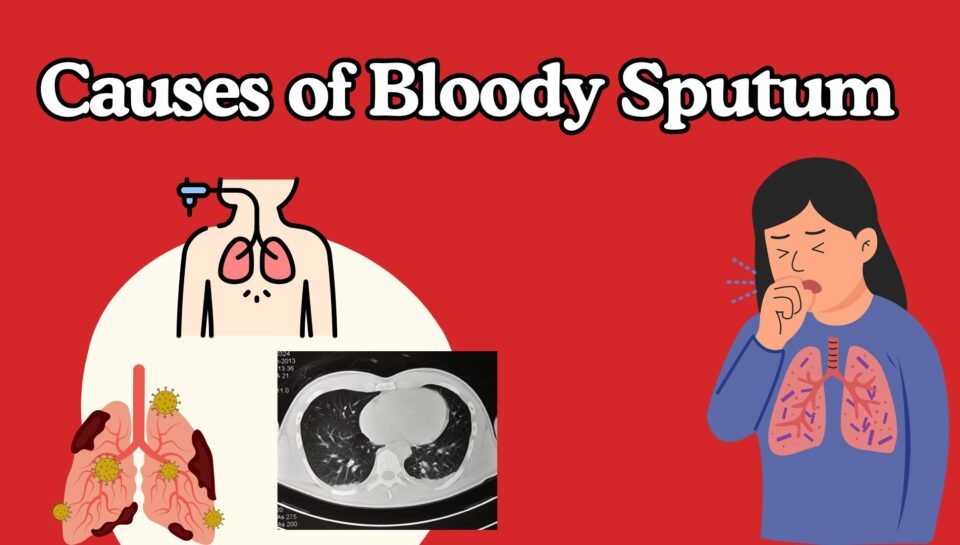

Hemoptysis in Children
Hemoptysis—the expectoration of blood from the lower respiratory tract—is an alarming symptom at any age.
In children, it is relatively rare but can range from benign to life-threatening causes.
What is Hemoptysis?
Hemoptysis refers to coughing up blood originating from the lower respiratory tract (trachea, bronchi, or lungs).
It may present as:
- Streaks of blood in sputum (mild)
- Gross hemoptysis with larger amounts of blood
- Massive hemoptysis (rare in children) – defined variably, often >200–600 mL over 24 hours, and may be
life-threatening due to airway obstruction.
True Hemoptysis vs Pseudo-hemoptysis
The list of causes of hemoptysis in children is very long and exhaustive.
It is important to differentiate between true hemoptysis and pseudo-hemoptysis.
Pseudo-hemoptysis is bleeding from a source other than the lower respiratory tract (i.e. lungs, bronchi).
Other sources of bleeding can be:
- Nosebleeds (epistaxis)
- Tongue or oral cavity bleeds
- Bleeding in the stomach that is vomited out (hematemesis)
- Pharyngeal bleed
What are the Causes of Hemoptysis in Children?
| Category | Cause | Notes |
|---|---|---|
| Infectious | Pneumonia | Especially with necrotizing or cavitary features |
| Tuberculosis | More commonly seen in adolescents | |
| Fungal infections (e.g., Aspergillosis, Histoplasmosis) | More common in immunocompromised children | |
| Lung abscess | Often from aspiration or secondary to infection | |
| Chronic Infections / Inflammation | Bronchiectasis (e.g., in cystic fibrosis) | Recurrent infections, chronic productive cough |
| Allergic bronchopulmonary aspergillosis (ABPA) | Seen in asthma or cystic fibrosis; associated with high IgE levels | |
| Congenital Malformations | Pulmonary arteriovenous malformation (AVM) | Rare; can cause significant bleeding |
| Pulmonary sequestration | Abnormal lung tissue with systemic blood supply | |
| Congenital heart disease with pulmonary hypertension | Elevated pulmonary pressures may cause bleeding | |
| Endobronchial mass | Hemangiomas, AVMs, tumors | |
| Trauma | Foreign body aspiration | May cause local irritation or erosion of bronchial vessels |
| Chest trauma | Blunt or penetrating trauma | |
| Post-bronchoscopy or intubation injury | Iatrogenic | |
| Inflammatory / Diffuse Alveolar Hemorrhage | Granulomatosis with polyangiitis (Wegener’s) | Small vessel vasculitis; may involve lungs and kidneys |
| Systemic lupus erythematosus (SLE) | May cause diffuse alveolar hemorrhage | |
| Goodpasture’s syndrome | Anti-GBM disease; hemoptysis with renal involvement | |
| Idiopathic pulmonary hemosiderosis | Recurrent hemoptysis and iron-deficiency anemia | |
| Heiner’s Syndrome | Milk allergy–induced diffuse alveolar hemorrhage | |
| Neoplastic (Rare) | Bronchial carcinoid tumor | Rare but can bleed |
| Lymphoma or metastatic tumors | Seen in older children or immunocompromised patients | |
| Hematologic / Coagulopathy (Bleeding Disorders) | Platelet disorders (e.g., ITP) | Can lead to mucosal bleeding including lungs |
| Clotting factor deficiencies (e.g., Hemophilia) | Usually with bleeding at other sites as well | |
| Anticoagulant or antiplatelet therapy | Iatrogenic, especially in complex cardiac patients | |
| Other / Miscellaneous | Drug-induced (e.g., inhaled toxins, chemotherapy) | Less common in children |
What is the Necessary Workup to Diagnose the Cause of Hemoptysis?
A good clinical history and thorough physical examination can help in narrowing down the cause of hemoptysis in your child.
However, for confirmation and localization of the source of bleeding, additional tests are often required.
Flexible Bronchoscopy
Flexible bronchoscopy is a simple procedure in which a pediatric pulmonologist passes a thin scope through the nose
into the airway and examines the airways for any active bleeding or cause of bleeding.
Samples from within the airway can be collected to test for the presence of blood cells and other markers.
CT Chest
A CT chest may be required to rule out important structural, infectious, or vascular causes of bleeding in the lungs.
Blood Tests
Your doctor might request blood tests to:
- Assess hemoglobin and overall blood counts
- Evaluate clotting profile and platelet function
- Screen for autoimmune disorders and other rare causes of hemoptysis
Early evaluation by a pediatric specialist is essential if your child is coughing up blood,
to identify the cause and initiate appropriate treatment promptly.