

Role of Nebulizers in Treatment of Respiratory Issues in Children
Nebulizers can be an effective treatment for respiratory issues in children, but they should be used judiciously. Learn how pediatric pulmonologists recommend their use to ensure safety and effectiveness.
Respiratory issues in children can range from common colds to more serious conditions like asthma, bronchitis, and pneumonia. For parents dealing with these concerns, one treatment option that often comes to mind is the nebulizer. While nebulizers can be effective in managing symptoms, it’s crucial to understand their role and use them properly. In this blog, we’ll dive into how nebulizers help treat respiratory conditions in children and why it’s important to use them judiciously — always under the guidance of a pediatric pulmonologist.
What is a Nebulizer and How Does It Work?
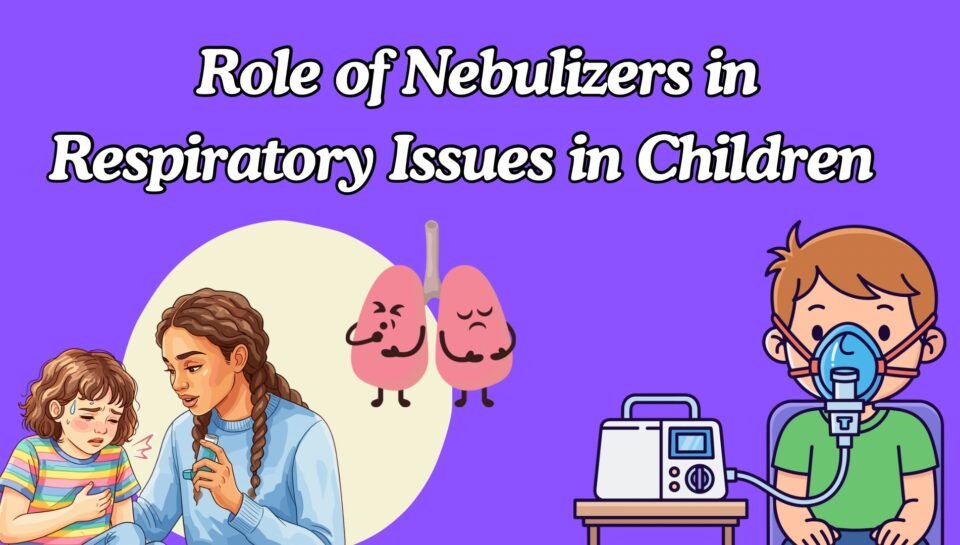
A nebulizer is a medical device that turns liquid medication into a fine mist, which a child inhales through a mouthpiece or mask. The mist allows the medication to reach deep into the lungs, helping to open airways, reduce inflammation, and ease breathing. Nebulizers are commonly prescribed for conditions like asthma , bronchiolitis , pneumonia , and other respiratory disorders.
Nebulizer is one of the devices that is used to administer medicines with different functions safely into the lungs. The particle size of the medicine generated with the nebulizer is small and reaches into the lungs but not small enough to go deep into the smaller airways.
There are various nebulizers available in the market however, the jet nebulizers with mask are most effective for children.
Common Respiratory Conditions Treated with Nebulizers
Nebulizers are typically used to give bronchodilators (medicines that open up the bronchus), saline in children with bronchiolitis, mucolytics (to thin out the thick mucus in the lungs) and antibiotics (in cases of pneumonia). They can be used for treating chronic or acute respiratory conditions in children, including:
Asthma : One of the most common reasons for nebulizer treatment. It helps deliver bronchodilators (like salbutamol) and steroids to open up the airways during an asthma attack.
Bronchiolitis : A viral infection common in infants and young children, which can cause wheezing and difficulty breathing. Nebulized saline and adrenaline treatments may help alleviate symptoms.
Chronic Suppurative Pulmonary Disease (Cystic fibrosis, Bronchiectasis, PCD) : Nebulizers are used to deliver mucolytics like hypertonic saline, NAC and Dornase Alfa to liquify the thick secretions to facilitate their drainage from the lungs. Antibiotics like Tobramycin, Colistin can also be delivered directly into the airway by nebulizers.
Why You Should Use Nebulizers Judiciously
While nebulizers can be highly effective in treating respiratory issues, it’s important to emphasize that they should only be used under the guidance of a pediatric pulmonologist . Here’s why:
1. Proper Diagnosis and Treatment Plan
Before using a nebulizer, it’s critical to understand your child’s exact condition. Respiratory symptoms like coughing, wheezing, and difficulty breathing can be caused by a range of issues, from viral infections to chronic conditions like asthma. A pediatric pulmonologist will assess your child’s symptoms, diagnose the condition, and recommend the appropriate treatment — which may or may not involve a nebulizer.
2. Avoid Overuse and Misuse
Nebulizers are used for chest issues leading to cough. They have no role in upper airway cough. Overuse of nebulizers for all types of cough can be counterproductive for child’s health. Using nebulizers judiciously ensures that the treatment plan is both effective and safe.
3. Personalized Treatment and Medication Choices
Pediatric pulmonologists will customize the treatment based on your child’s specific needs. There are different medications available for respiratory treatment, such as salbutamol (a bronchodilator) or steroids (to reduce inflammation). The right medication depends on your child’s diagnosis, age, and severity of symptoms.
4. Monitoring for Side Effects
While nebulized medications are generally safe, they can cause side effects, especially if used improperly. For instance, certain medications may cause oral thrush or an increase in blood pressure if used long-term. Regular check-ups with a pediatric pulmonologist help monitor any potential side effects and adjust the treatment plan as needed.
Conclusion
Nebulizers are an effective method of administering medications directly into the lungs. However, use of nebulizers should be a doctor’s decision as self-administering of nebulizations can be counter-productive for child’s lung health.