

Snoring in Children: A Wake-Up Call for Parents
Many parents smile when they hear their child snore, assuming it is a sign of deep sleep. While occasional snoring during a cold or allergy season is common, habitual snoring is not normal in children. Persistent snoring can be an early warning sign of Obstructive Sleep Apnea (OSA), a condition that can affect a child’s growth, learning, behaviour, and overall health.
Recognizing the warning signs early and seeking timely medical evaluation can make a significant difference.
What Is Snoring?
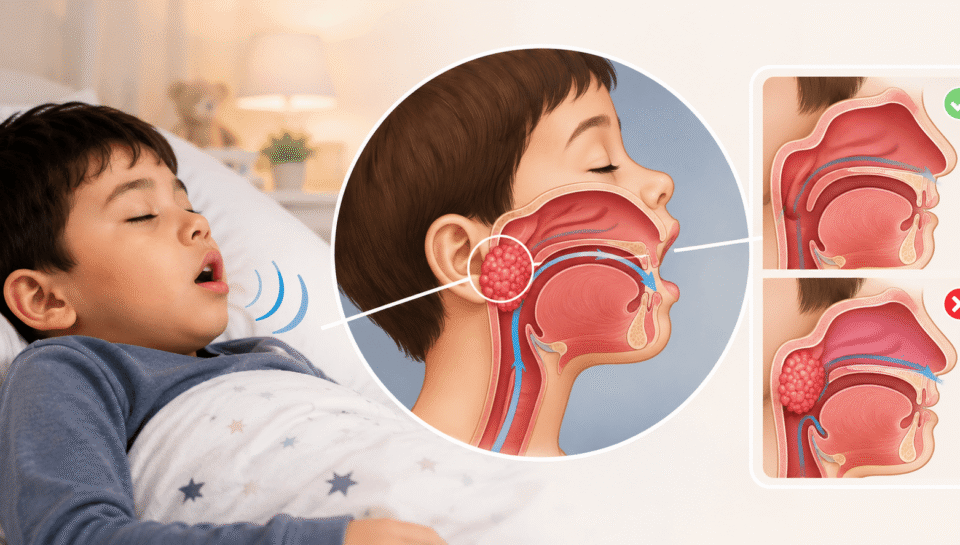
Snoring is the sound produced when airflow through the upper airway becomes partially blocked during sleep, causing the surrounding tissues to vibrate.
If your child snores more than three nights a week, it deserves medical attention.
What Is Obstructive Sleep Apnea (OSA)?
Obstructive Sleep Apnea is a sleep disorder in which the airway repeatedly becomes partially or completely blocked during sleep. These episodes reduce oxygen levels and disrupt normal sleep, even if the child does not fully wake up.
Unlike adults, children with OSA may not appear sleepy during the day. Instead, they often develop behavioural, learning, or growth-related problems.
Signs Parents Should Watch For
Your child may have Obstructive Sleep Apnea if you notice:
- Loud snoring on most nights
- Gasping or choking while sleeping
- Restless sleep
- Sleeping with the mouth open
- Daytime sleepiness or lethargy
- Poor school performance
- Irritability or mood changes
If several of these symptoms are present, further evaluation is recommended.
Why Is Untreated Sleep Apnea a Concern?
Healthy sleep is essential for a child’s physical and brain development.
Untreated OSA can lead to:
- Learning difficulties
- Memory and attention problems
- Behavioural issues resembling ADHD or Autism
- Poor academic performance
- Growth delay
- High blood pressure
- Metabolic disturbances
- Reduced quality of life
Early diagnosis helps prevent many of these long-term complications.
What Causes Snoring and Sleep Apnea in Children?
Several conditions can narrow the airway during sleep, including:
Enlarged Tonsils and Adenoids
This is the most common cause of pediatric obstructive sleep apnea.
Allergic Rhinitis and Chronic Nasal Blockage
Persistent nasal congestion increases airway resistance and encourages mouth breathing.
Obesity
Excess tissue around the airway increases the risk of airway collapse during sleep.
Craniofacial Conditions
Certain facial or jaw structures may predispose children to airway obstruction.
Neuromuscular or Genetic Disorders
Children with conditions such as Down syndrome or neuromuscular disorders have a higher risk of OSA.
How Is Obstructive Sleep Apnea Diagnosed?
While history and physical examination provide important clues, the gold standard test for diagnosing pediatric obstructive sleep apnea is a Sleep Study, also known as Polysomnography (PSG).
During the sleep study, several body functions are monitored overnight, including:
- Breathing pattern
- Oxygen saturation
- Heart rate
- Brain activity
- Eye movements
- Muscle activity
- Carbon dioxide levels (when indicated)
When Should Parents Consult a Pediatric Pulmonologist?
A Pediatric Pulmonologist specializes in respiratory and sleep disorders affecting children.
You should seek consultation if your child:
- Snores regularly
- Has pauses in breathing during sleep
- Has disturbed or restless sleep
- Experiences daytime behavioural or learning problems
- Has persistent mouth breathing
- Continues to snore even after tonsil surgery
- Has obesity with snoring
- Has chronic lung disease or neuromuscular disorders
A pediatric pulmonologist performs a comprehensive evaluation, determines whether a sleep study is needed, interprets sleep study results, and coordinates long-term management.
Key Takeaway for Parents
Persistent snoring is not simply a habit. It may be the first sign of Obstructive Sleep Apnea, a condition that can affect your child’s health, growth, behaviour, and learning.
If your child snores regularly or has pauses in breathing during sleep, do not ignore these symptoms. Early evaluation by a Pediatric Pulmonologist, along with a Sleep Study (Polysomnography) when indicated, can lead to timely diagnosis and effective treatment.
Healthy sleep is one of the strongest foundations for a healthy childhood.